Better Stability with Compression Socks: What Research Shows
Compression socks for sports
3 min read
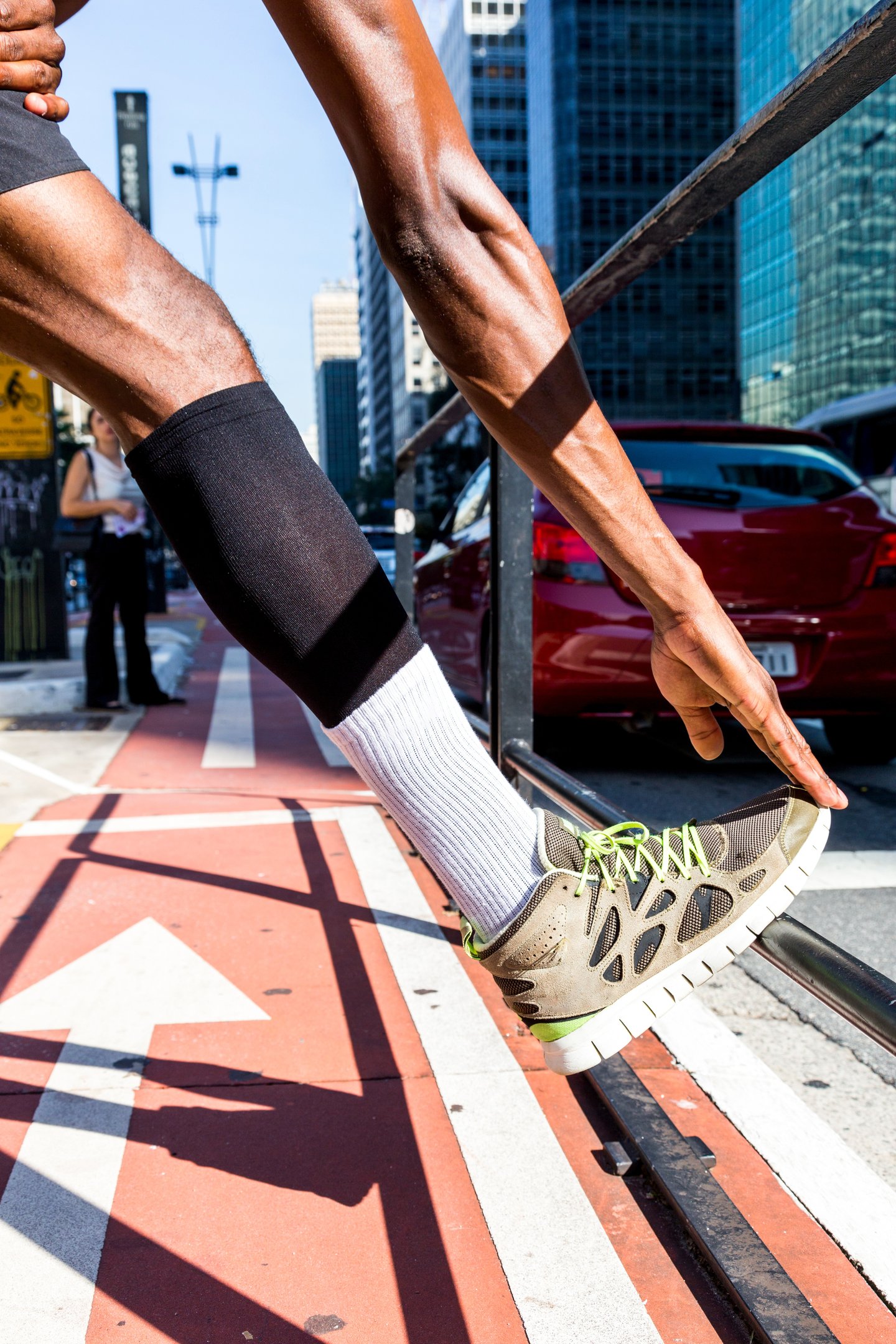
Compression Socks Improve Stability and Reduce Injury Risk During Dynamic Movements
When you perform everyday movements like stepping forward, climbing stairs, or exercising, your body constantly works to maintain balance and control. Research shows that compression garments can enhance your stability during these dynamic movements, potentially reducing your risk of falls and injuries. This protective benefit extends beyond athletic performance to anyone concerned about maintaining balance and preventing accidents.
Understanding how compression affects movement stability reveals important applications for multiple groups, from athletes looking to prevent sports injuries to older adults wanting to reduce fall risk during daily activities.
How Compression Enhances Movement Stability
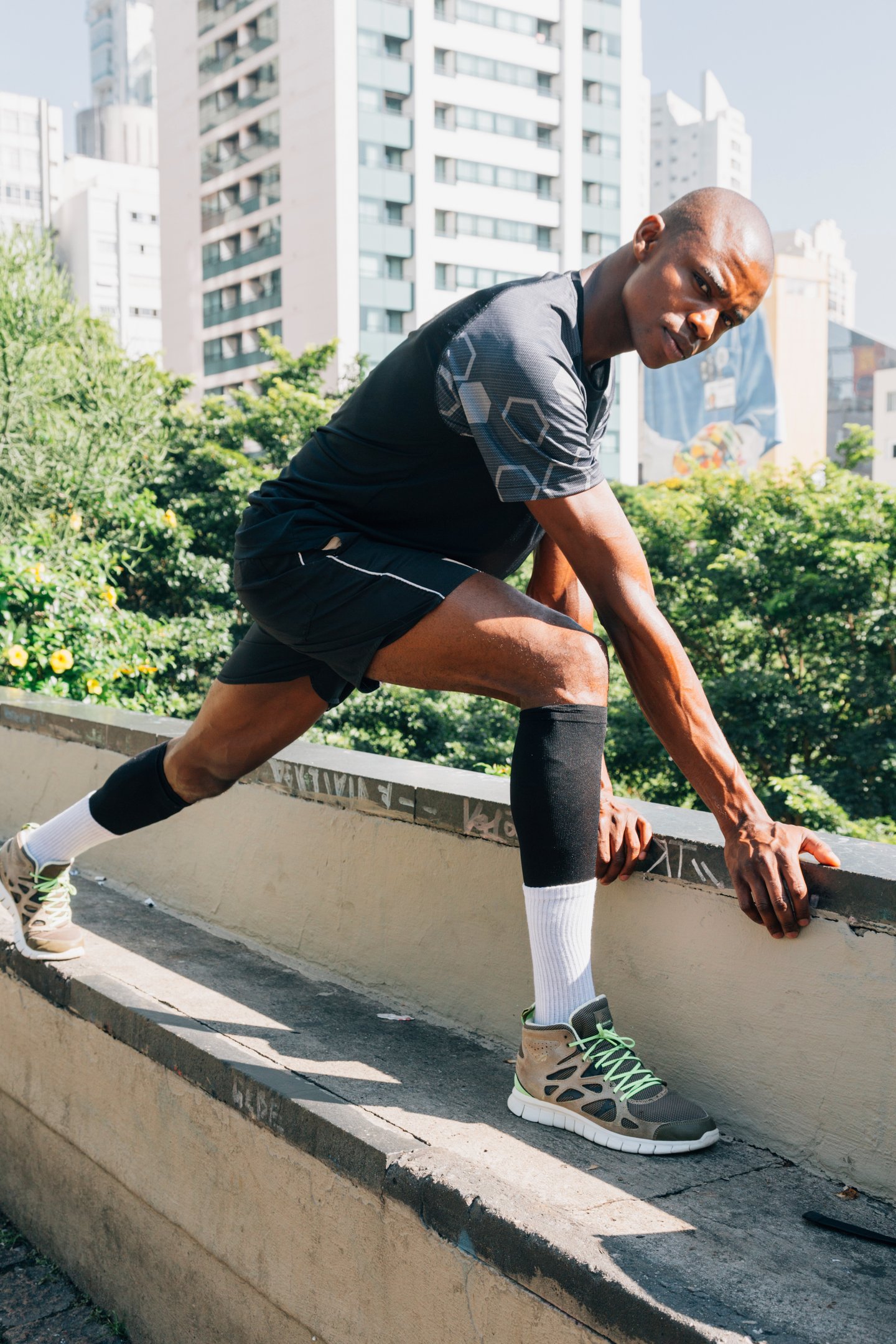
Stability during movement depends on how well your body controls its center of pressure—essentially how balanced you remain when shifting your weight. When researchers measured this during forward lunge movements, they discovered that tighter compression garments significantly improved stability compared to wearing no compression or loose-fitting garments.
The study tested three types of compression wear (calf sleeves, full socks, and leggings) at two different tightness levels. Participants wearing heavy compression maintained better balance for longer periods during the lunge movement. Specifically, tight-fitted compression extended the time before balance became compromised by approximately 0.28 seconds compared to no compression—a meaningful difference when preventing falls or maintaining control during physical activities.
This stability improvement works through enhanced proprioception, which is your body's awareness of where your limbs are positioned in space. Compression garments provide constant tactile feedback to your muscles and joints, helping your nervous system respond more quickly and accurately to balance challenges.
Practical Applications for Different Populations
The compression socks benefits demonstrated in this research extend to various everyday situations. Athletes performing dynamic movements during training or competition gain better control and balance, potentially reducing injury risk during quick directional changes or unstable positions. The research specifically tested forward lunges, but the stability principles apply to running, jumping, cutting movements, and other athletic activities where balance matters.
For older adults, improved stability during forward stepping movements could help prevent dangerous falls. Since falls represent a major health concern for aging populations, any intervention that enhances balance during weight-shifting movements offers meaningful protection. Using compression socks for women and men during errands, walking, or general daily activities might provide continuous stability support.
People recovering from lower limb injuries may also benefit from compression's stability enhancement. When joints or muscles are healing, the additional proprioceptive feedback from compression can compensate for temporarily reduced natural awareness and control.
Choosing the Right Compression Level
The research findings emphasize an important consideration: tightness matters. Participants experienced stability benefits specifically with heavy (tight-fitted) compression garments, while lighter compression showed less pronounced effects. This suggests that properly fitted, medical-grade compression providing adequate pressure delivers optimal stability enhancement.
However, tighter doesn't always mean better for everyone. While the study participants tolerated heavy compression well during the controlled testing, individual comfort and medical conditions should guide compression selection. For most healthy individuals seeking stability benefits, 15-20 mmHg compression provides meaningful support, while those wanting maximum stability enhancement might consider 20-30 mmHg under healthcare guidance.
Integration with Overall Injury Prevention
Compression provides one component of comprehensive injury prevention strategies. While enhanced stability offers valuable protection, it works best combined with appropriate strength training, flexibility work, and movement technique. Athletes and active individuals should view compression socks for running and exercise as supplementing, not replacing, proper conditioning and skill development.
This research was conducted by Angelakos, Mills, and O'Halloran, who investigated how different compression garment types and tightness levels affect lower extremity stability and alignment during forward lunge movements in healthy adults.
The Effects of Compression Garments on Stability and Lower Limb Kinematics During a Forward Lunge

Best compression socks
by community and science
You didn’t come this far to stop