Compression Socks Improve Lower Limb Proprioception
Compression socks for seniors
5 min read
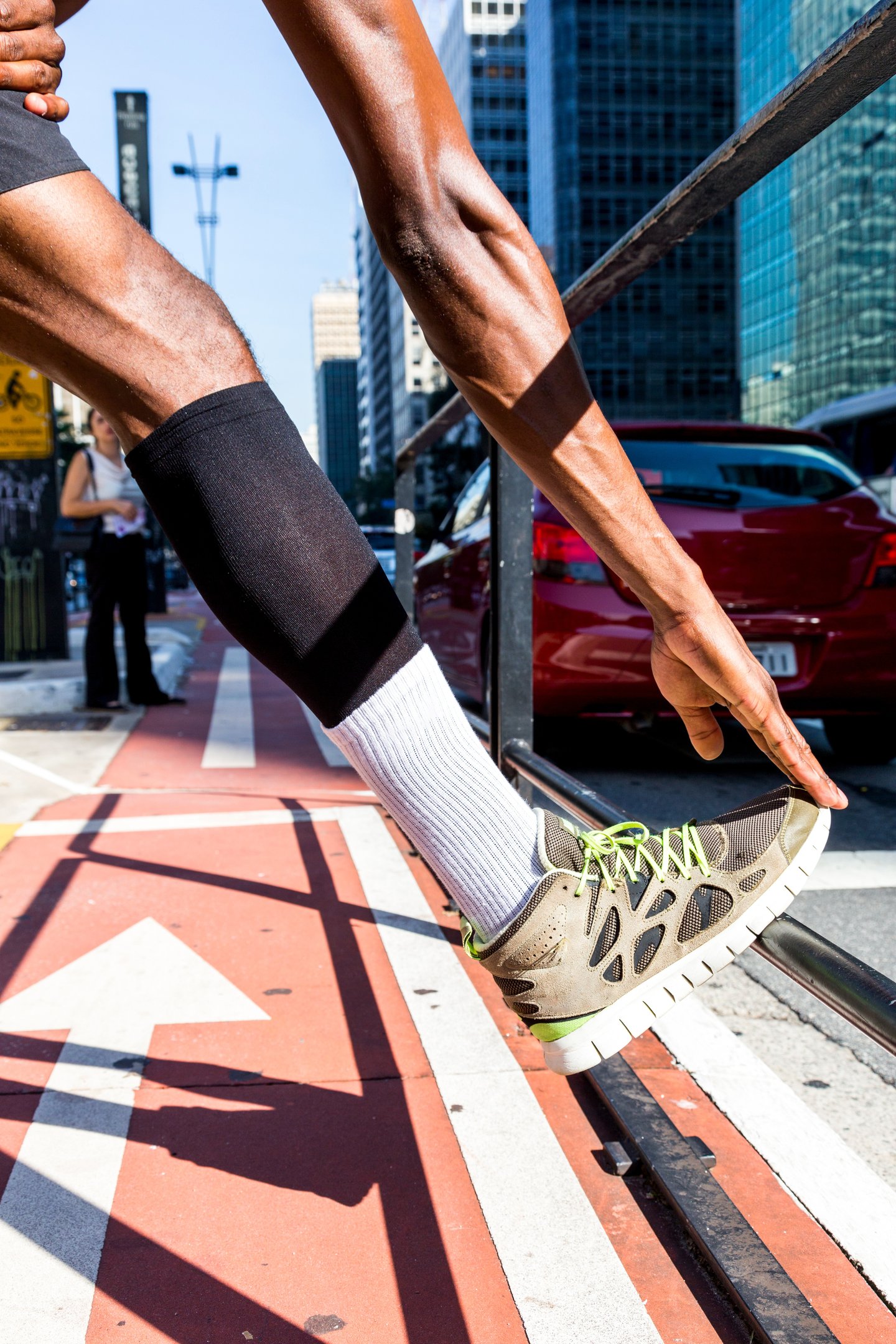
Compression and Tactile Stimulation Enhance Lower Limb Sensory Awareness
Accurate sensory awareness of lower limb position and movement underpins balance, coordinated walking, and injury prevention. Research examining how compression and tactile stimulation affect somatosensory acuity—the precision with which you perceive touch, pressure, and position in your legs—reveals that these interventions enhance sensory perception important for movement control and stability.
Understanding how different approaches to sensory enhancement work helps people choose effective strategies for improving proprioception and balance.
Somatosensory System Fundamentals
The somatosensory system encompasses all sensory information from body tissues including touch, pressure, vibration, temperature, pain, and proprioception. For lower limbs, this system provides critical information about foot contact with ground, joint positions, muscle tension, and movement occurring.
Somatosensory acuity refers to the precision of this sensory perception. High acuity means detecting small stimuli, discriminating between nearby touch points, and accurately sensing subtle position changes. Low acuity results in blurred sensory awareness, like trying to perform delicate tasks while wearing thick gloves.
Somatosensory acuity directly impacts motor control quality. When your brain receives precise sensory information about limb positions and environmental interactions, it can generate accurate motor commands. Degraded sensory acuity compromises movement precision and balance control.
Research Methodology
Investigators assessed lower limb somatosensory acuity under multiple conditions: bare skin, wearing compression garments, experiencing tactile stimulation from textured surfaces, and combinations of compression with tactile stimulation.
Somatosensory acuity was measured using two-point discrimination tests—determining the minimum distance between two touch points that can be perceived as separate rather than single stimuli. Smaller discrimination distances indicate better sensory acuity. Testing occurred at multiple lower leg locations to map regional sensitivity differences.
Participants also completed active movement detection tasks where minimal joint movements are identified. These tests assess proprioceptive acuity—the specific component of somatosensation related to position and movement awareness.
Enhanced Acuity from Compression Alone
Results demonstrated that wearing compression garments significantly improved somatosensory acuity compared to bare skin conditions. Participants showed better two-point discrimination and more sensitive movement detection when wearing compression.
The enhancement appeared across multiple leg regions, suggesting compression's effects work through general mechanisms rather than location-specific changes. The graduated pressure from ankle to calf provided consistent sensory enhancement throughout the covered area.
Compression socks benefits for sensory acuity work through constant mechanical stimulation of skin mechanoreceptors. This ongoing tactile input essentially "wakes up" sensory processing, making the nervous system more attentive to stimuli from compressed regions.
Tactile Stimulation Effects
Adding textured tactile stimulation—like the small raised nodules on specialized sock linings or textured insoles—provided additional sensory enhancement beyond compression alone. The combination of compression pressure and discrete tactile features created even more pronounced acuity improvements.
Tactile texturing works by providing location-specific stimulation patterns. Different texture configurations activate distinct mechanoreceptor populations, creating complex sensory signals the nervous system processes for enhanced awareness.
The combined compression-tactile approach showed additive benefits, with each element contributing independently to overall sensory enhancement. This suggests different mechanisms underlie compression's graduated pressure effects versus discrete tactile feature stimulation.
Mechanisms of Sensory Enhancement
Compression enhances somatosensory acuity through several mechanisms. The external pressure provides constant baseline stimulation that increases background activity in sensory nerve fibers. This elevated baseline makes the nervous system more responsive to additional stimuli.
Compression may also reduce sensory "noise"—random neural activity unrelated to actual stimuli. By providing consistent input patterns, compression helps the nervous system distinguish meaningful signals from background noise, effectively increasing signal-to-noise ratios.
The mechanical constraint from compression reduces tissue movement and distortion during limb motion. This stabilization may allow proprioceptive receptors to provide clearer position signals by minimizing confounding movement of receptor-containing tissues.
Applications for Movement Quality
Enhanced somatosensory acuity from compression socks for running and other activities translates to improved movement control. When you accurately sense foot contact patterns, weight distribution, and joint positions, motor commands become more precise.
For athletes, better sensory acuity supports technique refinement and injury avoidance. Subtle sensory feedback helps optimize movement patterns and detect early signs of fatigue or strain before problems escalate.
For older adults or those with balance concerns, enhanced proprioceptive acuity provides better information for postural control and fall prevention. More accurate position awareness allows earlier detection of instability and more precise corrective responses.
Individual Variation in Response
The study revealed considerable individual differences in baseline somatosensory acuity and response magnitude to sensory enhancement interventions. Some participants showed dramatic acuity improvements with compression, while others demonstrated modest benefits.
Factors influencing individual response likely include baseline sensory capability, neurological health, age-related sensory changes, and personal sensitivity to mechanical stimulation. Those with greater baseline sensory deficits may experience more noticeable improvements from enhancement strategies.
Personal experimentation helps determine whether compression provides subjectively meaningful sensory benefits for your activities and movement confidence.
Comparison with Other Sensory Interventions
Compression and tactile stimulation provide passive sensory enhancement requiring no active effort beyond wearing appropriate garments. This contrasts with active proprioceptive training exercises that improve sensory acuity through repeated practice and neural adaptation.
Passive enhancement works immediately but doesn't create lasting improvements in underlying sensory capabilities. Remove the compression, and acuity returns to baseline levels. Active training develops permanent improvements but requires time and consistent practice.
Combining passive enhancement during activities with regular proprioceptive training exercises likely provides optimal results—immediate performance benefits plus long-term capability development.
Optimal Application Strategies
For activities requiring precise movement control and balance, wearing compression garments with or without added tactile features provides immediate sensory enhancement. Activities like hiking difficult terrain, performing technical sports skills, or navigating challenging environments benefit from enhanced somatosensory acuity.
Choose compression socks for women and men providing 15-20 mmHg or 20-30 mmHg graduated pressure. Consider products incorporating textured inner surfaces for additional tactile enhancement, though standard smooth compression also provides substantial benefits.
Put compression on before activities requiring optimal sensory awareness. The immediate acuity enhancement allows instant benefit without adaptation periods.
Sensory Training Considerations
While compression provides immediate enhancement, regular sensory training develops fundamental improvements in somatosensory processing. Balance exercises performed barefoot or with minimal footwear expose sensory systems to varied stimuli promoting adaptation.
Some evidence suggests alternating between enhanced sensory conditions (compression, textured surfaces) and minimal stimulation (barefoot activities) optimizes sensory system development. The contrast between rich and sparse sensory environments may promote neural plasticity more effectively than constant enhancement or deprivation.
Clinical Applications
Enhanced somatosensory acuity from compression shows promise for populations with sensory deficits. People recovering from injuries affecting sensation, those with mild peripheral neuropathy, or individuals with age-related sensory decline might benefit from compression's sensory support during rehabilitation or daily activities.
However, severe sensory loss from conditions like advanced diabetes requires medical evaluation before using compression. Inability to sense excessive pressure could result in tissue damage if compression is too tight, while reduced sensation may prevent detecting problems requiring compression adjustment.
Future Research Directions
Additional investigation into optimal combinations of compression levels, textile textures, and wear duration would refine recommendations for sensory enhancement. Research examining whether enhanced acuity during activities translates to improved motor learning or reduced injury rates would establish broader applications.
Studies assessing how long sensory enhancements persist after compression removal could clarify whether immediate benefits extend into short-term carryover effects. Long-term studies examining whether consistent compression use combined with sensory training produces synergistic capability development would guide comprehensive intervention strategies.
This research was conducted by investigators who examined the effects of compression and combined compression-tactile stimulation on lower limb somatosensory acuity using two-point discrimination and movement detection testing.
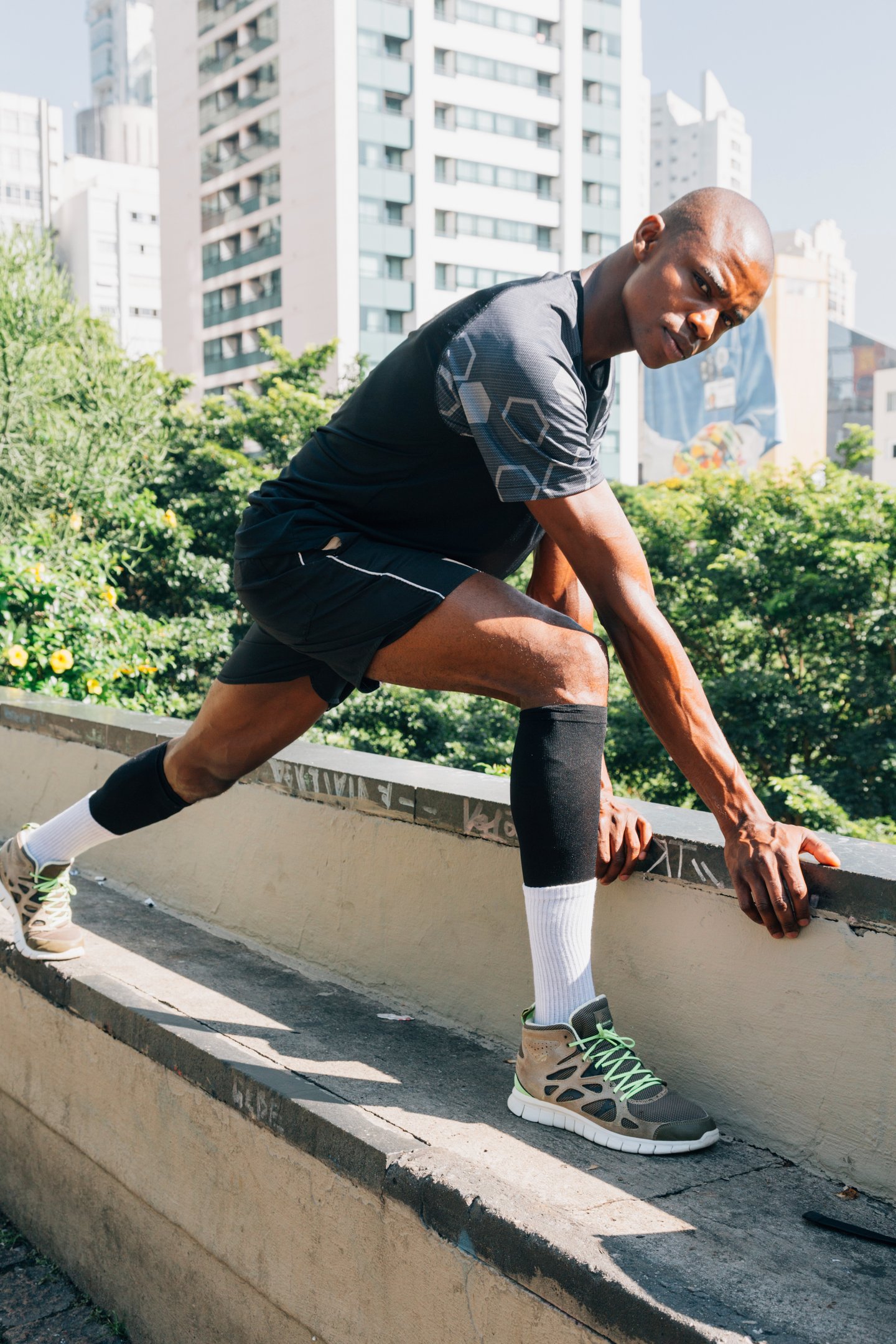

Best compression socks
by community and science
You didn’t come this far to stop