How Compression Socks Change Football Players' Kicking Mechanics for Better Performance
Compression socks for football / soccer
5 min read
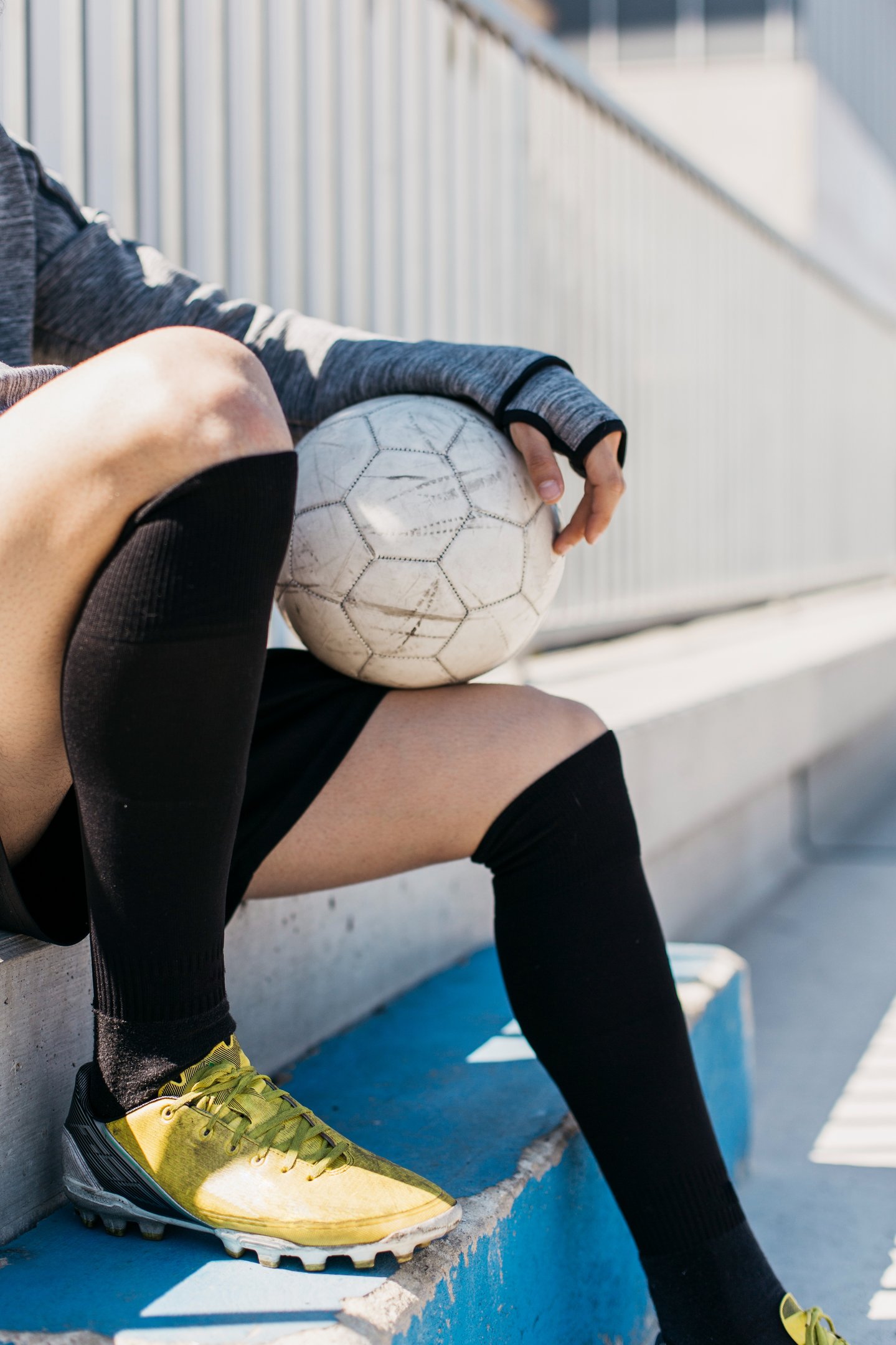
How Compression Socks Change Football Players' Kicking Mechanics for Better Performance
Understanding how equipment affects athletic movement is crucial for players seeking to optimize their technique. Recent research reveals that compression socks for running and football don't just improve circulation—they fundamentally change how players organize their kicking movements. These changes in movement patterns provide scientific insight into why compression garments can enhance performance, particularly for developing players working to refine their technique.
The research demonstrates that compression socks combined with textured insoles create measurable changes in how football players coordinate their kicking movements. These modifications in movement organization help explain the performance improvements observed when players use compression equipment, offering a deeper understanding of how gear selection can influence athletic technique.
Movement Organization in Football Kicking
Successful football kicking requires precise coordination between the hip, knee, and ankle joints working together as a kinetic chain. Each joint must move at the right time, with the right range of motion, to generate maximum ball velocity while maintaining accuracy. This coordination pattern, called "movement organization," can be influenced by sensory feedback from the foot and lower leg.
When players receive enhanced sensory information through compression and textured materials, their nervous system can better regulate joint movements and timing. This improved body awareness allows for more efficient movement patterns, particularly in less-skilled players who are still developing their kicking technique.
The research focused on understanding these movement organization changes rather than just measuring performance outcomes, providing insight into the mechanisms behind compression-related performance improvements.
Research Methodology and Participants
The study examined twelve young football players divided into two groups: six skilled players and six less-skilled players, all averaging around 15-16 years of age. Each participant performed twenty maximum-velocity instep kicks under four different equipment conditions to isolate the effects of compression and texture.
The four conditions tested were: smooth socks with smooth insoles, smooth socks with textured insoles, compression socks with smooth insoles, and compression socks for women and men with textured insoles. Researchers used advanced 3D motion analysis to capture detailed joint movements throughout the kicking motion.
This comprehensive approach allowed researchers to identify specific changes in hip, knee, and ankle coordination patterns that occurred when players wore different combinations of compression and textured materials.
Key Findings on Movement Changes
The most significant changes occurred in less-skilled players when wearing compression socks with smooth insoles. These players demonstrated significantly greater hip extension and flexion ranges of motion during the approach to ball contact, indicating more complete utilization of their kinetic chain for power generation.
Less-skilled players also showed increased variability in knee-ankle coordination when wearing compression socks with textured insoles. While variability might seem negative, in skill development contexts it often indicates exploration of new movement solutions and adaptation to enhanced sensory feedback.
Interestingly, the changes were most pronounced in developing players rather than skilled athletes. This suggests that compression socks benefits may be particularly valuable during the learning phase of skill development, when players are still establishing optimal movement patterns.
Understanding Skill Level Differences
The research revealed that compression and texture effects varied significantly based on player skill level. Less-skilled players showed more dramatic changes in movement organization, suggesting they were more responsive to the enhanced sensory feedback provided by compression materials.
Skilled players, who already possessed well-developed movement patterns, showed more subtle adaptations. Their established movement coordination was less dramatically altered by compression, but previous research has shown they can still benefit through performance improvements rather than fundamental movement changes.
This skill-dependent response indicates that compression socks may serve different purposes for different players: helping developing athletes establish better movement patterns while allowing experienced players to fine-tune already efficient techniques.
Somatosensory Enhancement Effects
The compression and textured materials work by enhancing somatosensory feedback—the information your nervous system receives about body position, muscle tension, and limb movement. This enhanced awareness allows players to better regulate their movement patterns during dynamic actions like kicking.
Compression socks provide consistent pressure feedback that helps players sense their leg position and muscle activation more precisely. When combined with textured insoles that stimulate foot receptors, this creates a rich sensory environment that can improve movement control.
For developing players, this enhanced feedback appears to facilitate exploration of more effective movement patterns, potentially accelerating the skill learning process and helping establish more efficient kicking techniques.
Practical Applications for Player Development
These findings have important implications for youth football development programs. Coaches working with developing players might consider incorporating compression socks and textured insoles during technical training sessions focused on kicking skill development.
The enhanced movement variability observed in less-skilled players suggests that compression equipment could be particularly valuable during the exploratory phases of skill learning, when players are discovering optimal movement solutions.
For individual players, understanding that compression affects movement organization can inform training decisions. Players working to modify their kicking technique might benefit from the enhanced sensory feedback during practice sessions.
Training and Equipment Considerations
The research suggests that compression and textured materials create an enriched sensory training environment that may accelerate skill development. This could be particularly valuable for players returning from injury who need to re-establish movement patterns or those making technique modifications.
However, players should be aware that the enhanced feedback takes time to integrate into existing movement patterns. The increased coordination variability observed in the study indicates an adaptation period where players explore new movement possibilities.
For competitive situations, players should ensure they're comfortable with any equipment changes and have adequate practice time to integrate the enhanced sensory feedback into their performance routine.
Long-term Development Implications
The finding that compression primarily affects less-skilled players suggests these materials could play a valuable role in long-term player development. Early exposure to enhanced sensory feedback might help young players establish more efficient movement patterns from the beginning of their training.
This could potentially reduce the need for significant technique modifications later in development, when movement patterns become more firmly established and harder to change.
The research also suggests that as players develop higher skill levels, the movement organization benefits of compression may diminish, though performance benefits may still occur through other mechanisms like improved circulation and reduced fatigue.
This research was conducted by Hasan, Davids, Chow, and Kerr, who investigated the effects of wearing compression garments and textured insoles on movement organization patterns during lower limb interceptive actions in association football.
Best compression socks in EU
You didn’t come this far to stop