How Compression Stockings Reduce Muscle Soreness and Boost Performance in Back-to-Back Football Matches
Compression socks for football / soccer
5 min read
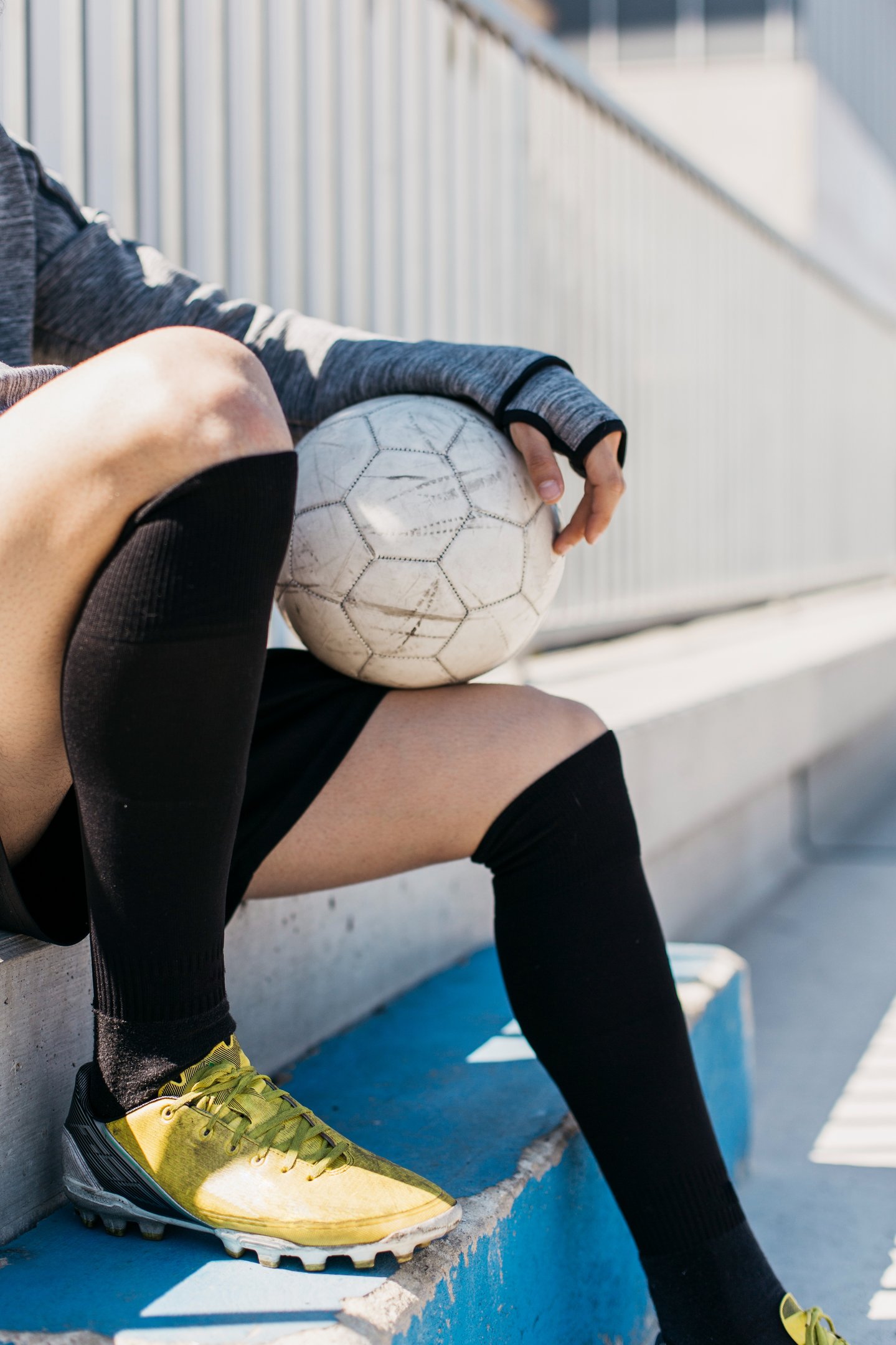
How Compression Stockings Reduce Muscle Soreness and Boost Performance in Back-to-Back Soccer Matches
For soccer players facing packed tournament schedules or frequent matches with limited recovery time, maintaining performance quality becomes increasingly challenging. The physical demands of soccer—covering over 10 kilometers per match with constant acceleration, deceleration, and changes of direction—create significant muscle fatigue that can compromise performance in subsequent games. Recent research reveals that compression socks for running and soccer can provide a practical solution to this common problem.
The groundbreaking study demonstrates that wearing compression stockings during matches and recovery periods significantly improves both physical performance and perceived muscle comfort when players face the challenge of competing again within 72 hours. These findings offer evidence-based guidance for players, coaches, and teams looking to maintain competitive standards during demanding match schedules.
The Challenge of Match Congestion
Modern soccer frequently requires players to perform at high levels with minimal recovery time between matches. Tournament play, league fixtures, and international competitions often create scenarios where teams must compete every few days. This "fixture congestion" poses significant physiological challenges that can impact both individual performance and injury risk.
During intense soccer matches, players experience substantial muscle damage from the repeated eccentric contractions involved in running, jumping, cutting, and kicking. This damage contributes to decreased performance, increased soreness, and elevated injury risk in subsequent matches. The 72-hour recovery period commonly seen in tournament play provides insufficient time for complete physiological recovery through traditional methods alone.
Compression socks benefits extend beyond simple circulation improvement to include mechanisms that may accelerate recovery and preserve performance quality during these demanding periods.
Research Design and Methodology
The comprehensive study followed twenty under-20 soccer players through two competitive matches separated by exactly 72 hours—a common scenario in tournament play. Players were randomly assigned to either wear compression stockings (20-30 mmHg pressure) or regular socks during both matches and throughout the 72-hour recovery period.
The research measured multiple performance indicators including heart rate responses, perceived exertion levels, muscle soreness ratings, and detailed match performance data. This comprehensive approach allowed researchers to evaluate both objective performance measures and subjective player experiences.
Importantly, the study examined real match conditions rather than laboratory simulations, providing highly applicable results for actual competitive scenarios that players and teams face regularly.
Key Performance Findings
The results revealed significant advantages for players wearing compression stockings, particularly in the second match. Most notably, players using compression covered greater distances at high-intensity speeds—the type of running that often determines success in critical match moments like defensive recoveries, attacking runs, and pressing actions.
Heart rate responses and perceived exertion levels remained similar between groups during both matches, indicating that the performance improvements occurred without requiring additional physiological stress. This suggests that compression stockings help players maintain their normal effort levels while achieving better performance outcomes.
The performance benefits were most pronounced in high-intensity activities, which align with the most decisive actions in soccer. These findings suggest that compression socks for women and men can help maintain the explosive, game-changing movements that separate successful teams from those that fade during tournament play.
Muscle Soreness and Recovery Benefits
Perhaps equally important as the performance improvements were the significant reductions in perceived muscle soreness experienced by players wearing compression stockings. During the second match, compression stocking users reported substantially lower levels of muscle discomfort compared to the control group.
This reduction in muscle soreness likely contributed to the performance improvements by allowing players to move more freely and confidently during the second match. When players experience less discomfort, they can focus on tactical execution and skill performance rather than managing physical limitations.
The muscle soreness benefits extended beyond the matches themselves, with players reporting improved comfort throughout the 72-hour recovery period. This enhanced recovery experience could have implications for training quality, sleep satisfaction, and overall player well-being during demanding competitive periods.
Mechanisms Behind the Benefits
The performance and recovery improvements likely result from compression's effects on several physiological processes. Enhanced venous return helps remove metabolic waste products more efficiently, potentially reducing the accumulation of fatigue-related substances that can impair subsequent performance.
Compression stockings may also provide mechanical support to muscles during the eccentric contractions common in soccer, potentially reducing the extent of muscle damage that occurs during matches. This protective effect could explain both the reduced soreness and maintained performance quality in the second match.
The consistent pressure provided by compression garments may also enhance proprioceptive feedback, helping players maintain better movement control and coordination even when experiencing fatigue from previous efforts.
Practical Applications for Teams and Players
These research findings offer immediate practical applications for soccer teams facing match congestion. Players can wear compression stockings during matches, training sessions, and recovery periods to potentially maintain performance quality across multiple competitive efforts.
The 72-hour protocol tested in the study directly applies to common tournament formats, making the findings highly relevant for teams preparing for competitions with multiple matches in short timeframes. Coaches can implement compression stocking use as part of their recovery protocols without requiring significant changes to existing preparation routines.
For individual players, the research suggests that compression stockings could be particularly valuable during periods of high match frequency, such as tournament play, fixture congestion, or when balancing club and national team commitments.
Implementation Considerations
Players and teams considering compression stocking use should focus on proper fit and pressure levels. The study used 20-30 mmHg compression stockings, which provide moderate to firm pressure. Properly fitted compression garments should feel snug but not restrictive, allowing normal movement while providing consistent pressure.
The research protocol involved wearing compression stockings throughout both matches and the entire 72-hour recovery period, suggesting that consistent use rather than intermittent application may be key to achieving maximum benefits.
Teams should introduce compression stockings during training periods rather than implementing them for the first time during important competitions, allowing players to adapt to the sensation and ensure comfort during high-stakes matches.
Broader Implications for Athletic Performance
This research contributes to growing evidence that compression garments can serve as practical performance enhancement tools rather than just recovery aids. The ability to maintain high-intensity performance during the second match suggests that compression stockings address fundamental limitations that typically emerge during match congestion.
The findings also highlight the importance of considering both objective performance measures and subjective experiences like muscle soreness when evaluating recovery interventions. Players who feel better often perform better, creating a positive cycle that can extend beyond individual matches.
For sports with similar demands involving repeated high-intensity efforts with limited recovery time, these findings suggest that compression garments could provide valuable performance and recovery benefits.
This research was conducted by Gimenes, Marocolo, Pavin, Pagoto Spigolon, Neto, Côrrea da Silva, Duffield, and Ribeiro da Mota, who evaluated the acute effects of compression stockings on match-based physical performance indicators and perceptual responses during two consecutive soccer matches with 72-hour recovery.
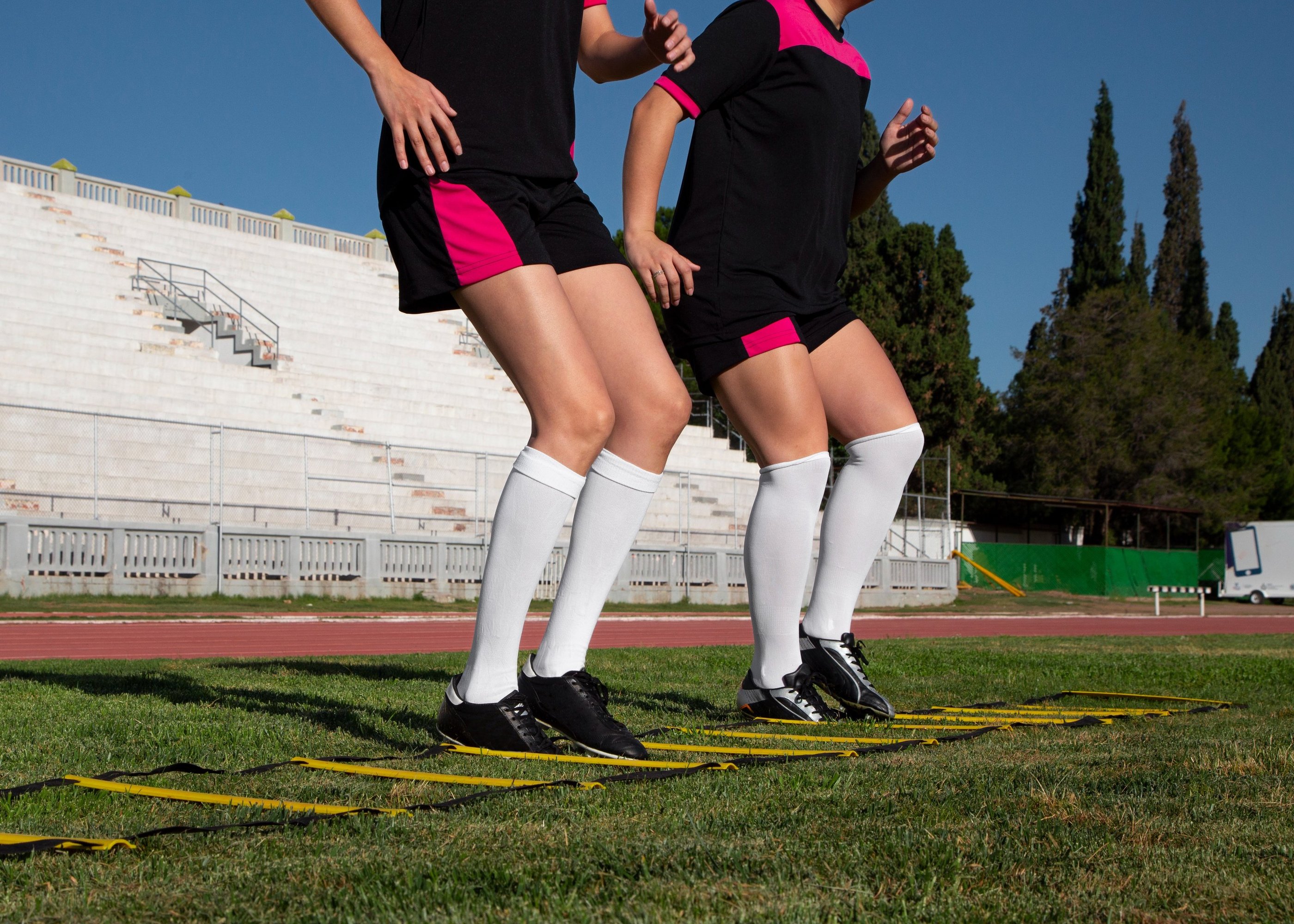
Best compression socks in EU
You didn’t come this far to stop